
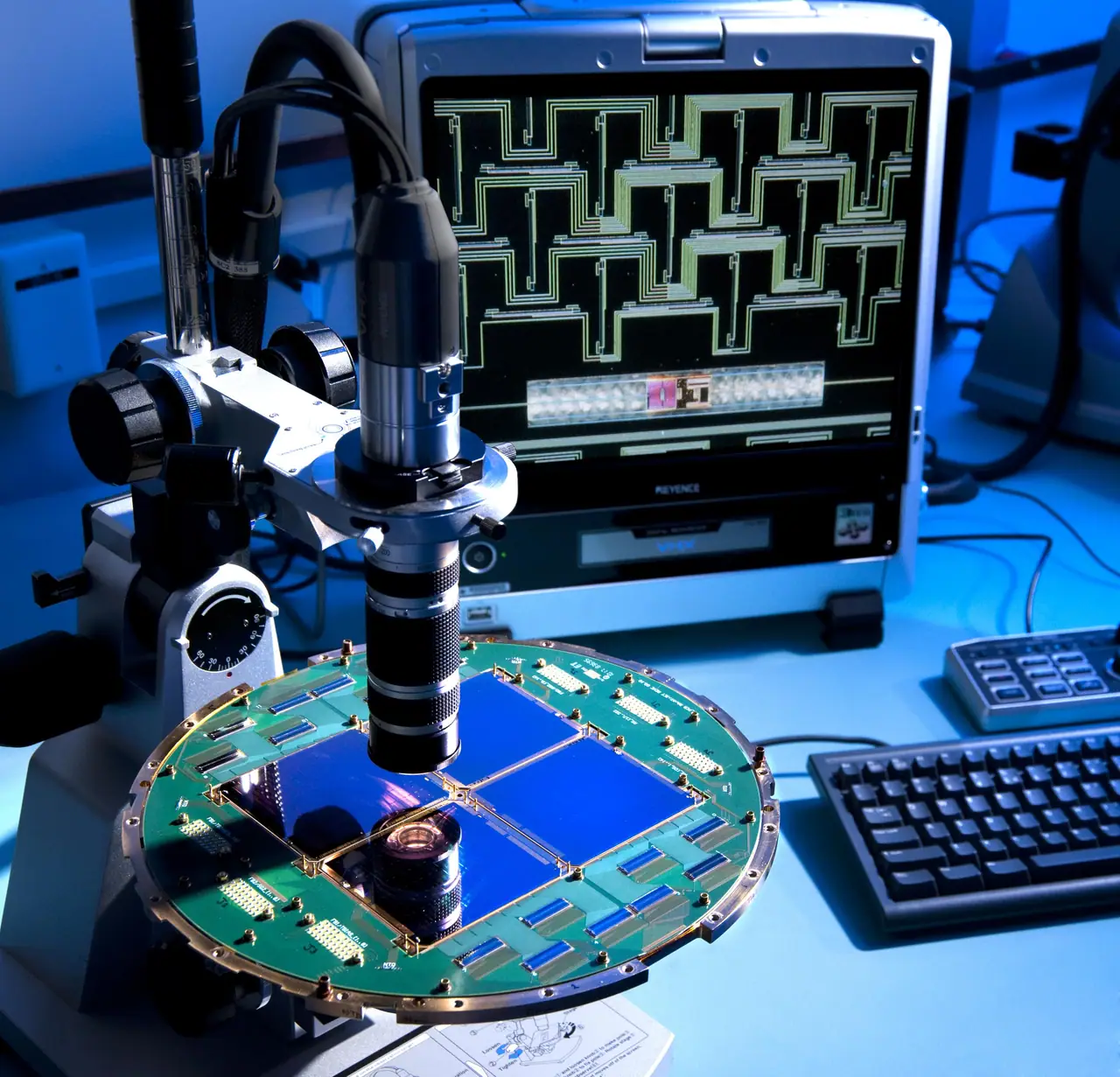
Impact of Nitrogen and Oxygen Interstitials on Niobium SRF Cavity Performance
Hannah Hu, Young-Kee Kim, Daniel Bafia
Abstract
Superconducting radiofrequency (SRF) cavities are the leading technology for highly efficient particle acceleration, and their performance can be significantly enhanced through the controlled introduction of interstitial impurities into bulk niobium. Nitrogen doping has demonstrated a substantial reduction in surface resistance, which improves the quality factor of the cavities. More recently, oxygen doping has emerged as a promising alternative, demonstrating comparable reductions in surface resistance. In this study, we combine cavity measurements on 1.3 GHz niobium SRF cavities subjected to a range of nitrogen- and oxygen-based treatments with material characterizations performed on cavity cutouts processed under identical conditions. This approach allows us to quantitatively assess the contribution of each impurity to the reduction of surface resistance. We find that nitrogen is ten times more effective than oxygen in reducing surface resistance at 16 MV/m. We also observe an additive effect of O and N impurities in reducing R$_\mathrm{T}$. We discuss these results in the context of field dependent nonequilibrium superconductivity, gap enhancement, and hydrogen trapping mechanisms.
Abstract: arXiv descriptive metadata (CC0). Thank you to arXiv for use of its open access interoperability. This service was not reviewed or approved by, nor does it necessarily express or reflect the policies or opinions of, arXiv.
Record
- Archive ID
- arxiv:2509.18564
- Published
- Sep 23, 2025
- Updated
- Jan 21, 2026
- arXiv
- 2509.18564
- Categories
- physics.acc-ph, cond-mat.supr-con
- Provenance
- arxiv